

What is a mascot?
At its core, a mascot is a symbol that represents a group, brand, or event. Often in the form of a character, animal, or object with human traits. Mascots are there to bring luck, engage the audience, and embody an identity. But nowadays, they are more than that: they are walking marketing campaigns, social media stars, and cultural icons in their own right. That human layer is important: people respond faster to a face, character, or figure than to a logo, slogan, or abstract brand story. A good mascot encapsulates in one image what an organization wants to stand for: playful, tough, smart, friendly, or even rebellious.
Where does the idea of the mascot come from?
The history of the mascot begins... well, we don't know exactly. The term is at least derived from the French - you guessed it - mascotte, which literally means 'bringer of luck.' The word became popular after the comic opera La Mascotte by Edmond Audran in 1880. In this performance, a peasant girl brings luck to everyone who employs her, as long as she remains a virgin. Different times, I suppose. Although the world has changed completely since then, the core remains surprisingly recognizable: a mascot must evoke something positive and give people the feeling that there is luck, energy, or connection attached to it.
Although the name is relatively recent, the idea of mascots is ancient. Think of totem animals among indigenous peoples, or Roman legions with symbolic standards. Even in the military and at sea, objects, animals, or even people were considered lucky charms for the team, regiment, or ship. This shows that the mascot did not start as a promotional tool, but as a bearer of meaning: a visible sign from which people derived protection, pride, or camaraderie. Only much later was that symbolic idea translated into entertainment and brand communication.
The first in the history of the mascot
The rise of sports as popular entertainment in the 19th century gave mascots a new role. In the United States, universities began to use animals as mascots during sports events. That was no random choice. Sports increasingly revolved around rituals, traditions, and group feelings, and a mascot fit perfectly into that picture.
One of the most famous pioneers is Handsome Dan, a bulldog who became the official mascot of Yale University in 1892. This living mascot proudly paraded along the sidelines during games and grew into a cultural phenomenon. Other universities quickly followed, with bears, roosters, tigers, and donkeys as lucky animals. Animals were particularly suitable because people automatically associate traits with them: a bulldog stands for perseverance, a tiger for strength, an eagle for pride and sharpness.
At that time, mascots in sports primarily had symbolic value: strength, loyalty, speed, or cleverness. All qualities that teams wanted to embody. They became the emotional figurehead of a club or university. For supporters, this worked strongly: a mascot not only gave a team a face but also a character with which one could identify. That is also why mascots in sports often outlast players, coaches, or slogans: they embody the feeling around a club, not just a season.
From animals to dancing costumes
In the 20th century, everything changed. With the advent of television and later social media, the mascot became a visual spectacle. What was once primarily a symbol or living presence now also had to entertain, pose, move, and work on camera.
Instead of a real dog along the field, there was now a staff member in a large suit - colorful, recognizable, and often a bit clumsy. This transformation was practical (you don't have to feed the animal) and strategic: a costumed figure is photogenic, funny, and flexibly deployable. Moreover, such a costume gives organizations much more control over the interaction with the audience and over the brand's appearance.
A milestone was the introduction of Mr. Met in 1963, the mascot of the New York Mets baseball team. A man with a giant baseball head became one of the first real 'animated' mascots in American sports. This also shifted the mascot from a symbol to a performer: not just being present, but truly becoming part of the show.
Also on the international stage, mascots made their entrance. The 1972 Olympic Games in Munich presented Waldi, a dachshund in rainbow colors, as the first official mascot. Since then, no major sporting event is complete without a cuddly, cartoonish figurehead. Such an event mascot does more than just wave cheerfully: it must radiate hospitality, give the tournament its own face, and make merchandise sellable. This also explains why organizers pay so much attention to it: a good mascot lives on in posters, in TV clips, on plush toys, and years later still in the collective memory.
Mascots as brand builders: from Tony the Tiger to TikTok
Where sports began, the advertising world followed. As early as the beginning of the 20th century, companies started using characters to sell products: Loeki the Lion still opens our commercials, Tony the Tiger gave breakfast cereals a tough, sporty identity, and of course, there was Ronald McDonald, the clown who made fast food a family spectacle. Brands discovered early on that a character often sticks more easily than a product feature. People remember a tiger, clown, or lion more quickly than a list of benefits on the packaging.
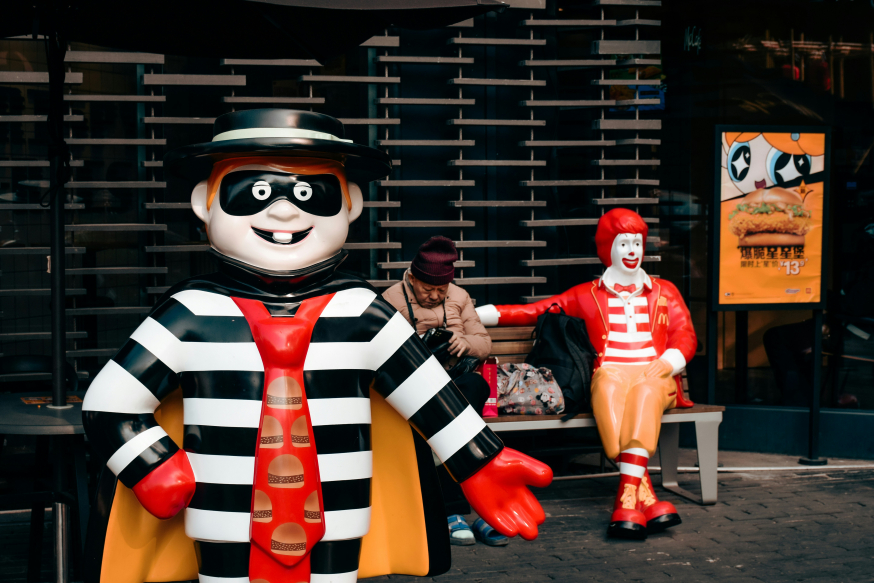
These mascots became the faces of brands. They appealed to young and old, remained recognizable for years, and were excellently deployable in campaigns. In marketing terms: they increased brand recall, trust, and conversion. This is especially valuable for products that are similar. Breakfast cereals, snacks, soft drinks, or fast food often compete on the same shelves and with similar promises. A strong mascot can then make the difference between 'just another brand' and something that feels instantly recognizable. For children, this works through playfulness and recognition; for adults, often through nostalgia: many mascots ride on childhood memories and thus build brand preference for years.
Nowadays, many mascots primarily live on social media. Think of the dancing M&M's, the sarcastic Twitter tones of Duolingo's owl, or the TikTok versions of fast food mascots. The mascot has grown along with the medium. Online, a mascot no longer has to color neatly within the lines. It is often the slightly chaotic, cheeky, or self-aware mascots that do well because they feel like internet characters rather than classic advertising figures.
Sometimes a mascot is no longer a reflection of the current course; discover when rebranding is a strategic move to sharpen your brand identity.
Why mascots continue to appeal to us
What makes mascots so effective? Four simple reasons:
1. They make brands human
Mascots give a face and character to a faceless company. They can be funny, wise, tough, or endearing, and thus more easily build an emotional bond with people. You are no longer a company; you are your mascot. Personification is a good way to get closer to people.
2. They are visually powerful
With their bright colors, big eyes, and over-the-top movements, mascots are made to stand out. Perfect in a time when you need to grab someone's attention within 3 seconds on a scrolling timeline or when you want to capture attention on a large football field. They work almost like visual shortcuts: even before you read text or hear sound, you already know which brand, team, or event you are dealing with.
3. They are culturally timeless
Whether you are 8 or 80: everyone knows a mascot from their youth. They are in our collective memory and remain relevant. This makes mascots remarkably durable. A campaign can disappear, and a slogan can become outdated, but a strong figure can last generations and be continuously adapted to the times.
4. They tell stories
Mascots are storytellers. They can express brand values, personify campaigns, or address social issues without becoming boring. The 'lore' behind some mascots is truly enormous. And that narrative element is becoming increasingly important: people want to see not just a picture but also know who such a figure is, what they stand for, and why they behave the way they do. A mascot with personality lives longer than a mascot that exists only to pose for a photo.
As we automate processes, the paradoxical need for a recognizable face grows; read more about the necessity of humanity in a digital world and how you maintain that connection.
And now? The mascot of the future is digital
The future of mascots is virtual. More and more brands are using digital mascots: as avatars on social media, as 3D-animated influencers, or even as AI-generated characters.
Look at Lil Miquela, a virtual influencer with millions of followers, or the Phryges, the mascots of the 2024 Olympic Games in Paris, which lead a life of their own online. This enables new forms of interaction: direct, scalable, and not bound to a physical location or someone in a heavy costume. A digital mascot can respond to a meme today, appear in a game tomorrow, and carry a campaign in multiple languages at once next week.
Also in video games, education, and branded content, mascots play a leading role. They are increasingly designed to interact with target audiences rather than just entertain. As a result, the mascot is slowly shifting from a decorative piece to an interface: not just a face of a brand, but sometimes also a guide, assistant, or digital point of contact.
The shift to virtual ambassadors is just the tip of the iceberg; delve into the challenges and opportunities of AI within organizations striving for sustainable growth.
The history of the mascot: from cartoon to communication tool
The mascot is more than a funny suit or cartoon figure. It is a powerful communication tool that has been evolving with our culture, technology, and marketing for over a century.
Whether it's a booming bulldog along the sidelines, a cornflakes tiger on the breakfast table, or a dancing avatar on TikTok - mascots continue to appeal to us because they give something human to the abstract. And perhaps that is ultimately the most important explanation for their success: they make large systems small, friendly, and recognizable. A brand becomes a character, an event gets a face, and a club feels like a story you want to be part of.
A mascot can give a significant boost to your brand. It makes it more personal, recognizable, and you always have someone to tell your story. It can therefore be a good way to position yourself stronger. If you want to try it, think carefully about your brand and the strategy that the mascot should convey. Do you have that? Good luck!