
In his previous life as a businessman, Trump left a trail of bankruptcies and defrauded customers, suppliers, and employees. His role as a successful tycoon in the reality show 'The Apprentice' was a television-manufactured myth. During his first term, his mismanagement of the coronavirus pandemic caused thousands of unnecessary casualties.
During his second term, he fired numerous government employees without just cause, deported both illegal and legal immigrants without due process, cut food and medical aid for millions of people, and unleashed a global trade war under false pretenses. He promised to end wars in record time but failed spectacularly. Nevertheless, there are a few useful lessons to be distilled from Donald Trump's leadership style for conscious leaders in the Netherlands. Frank Schaper outlines 7 do's and 7 don'ts for you.
7 DO'S of Donald Trump's leadership
1. Pay attention to image
For Donald Trump, image is everything. He must always come across as successful and powerful. Therefore, he pays a lot of attention to the decor, and his Oval Office is now overloaded with gold-painted objects. Gold is good. Disadvantage: too much gold comes across as vulgar, and often the outside does not match the inside. However, those who pay too little attention to image run great risks. Joe Biden experienced this.
2. Think big
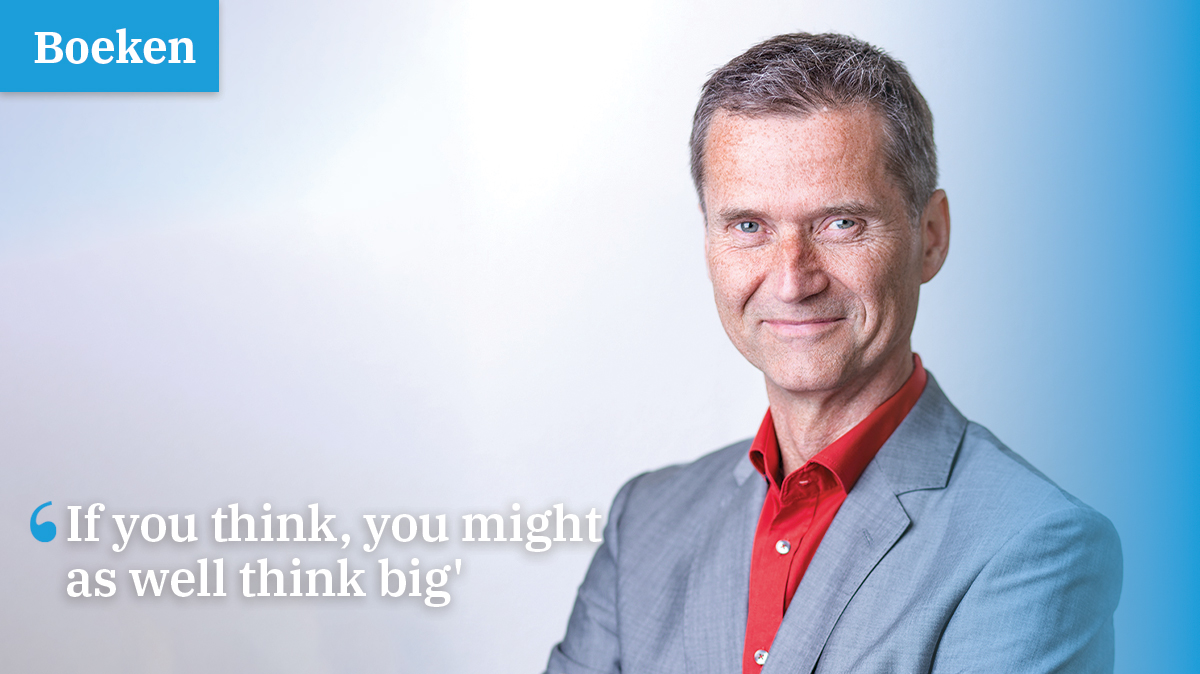
Trump's father was a real estate magnate from Queens, a suburb of New York. Manhattan was the most famous neighborhood in New York, known for its skyscrapers, Broadway, and Wall Street. Manhattan was also the place where young Donald went in the 1970s. His motto: 'If you think, you might as well think big.' This perfectly aligned with American culture, where everything must be bigger than life.
3. Reward loyalty
To be successful, you need other people. Trust and loyalty are essential to achieve results. In his second term, Trump appointed only those who had shown loyalty to him in the previous period to his cabinet. Their loyalty was rewarded. This also had a downside: competence, experience, and abilities were subordinated to personal loyalty to the leader. With only yes-men around him, healthy dissent is lacking, and disaster looms.
4. Celebrate your successes
In the Netherlands, 'success' has been a dirty word for decades. Self-promotion was dismissed as 'bragging'. That is why we are so allergic to typical American chest-thumping. This has changed a bit now. Modesty is still a virtue, but celebrating successes is also important, especially when deserved and strengthens team spirit. Trump does not miss an opportunity to highlight his successes. However, his unhealthy narcissism causes him to exaggerate, provoke resistance, and claim successes of others. Trump does it too much, Biden did it too little. In short: celebrate your successes, but do it in moderation.
5. Use setbacks to your advantage and don’t give up
Trump was the first former president to be formally charged and entered a courtroom as a defendant. In fact, that was a disgrace, resulting in a 'mugshot'. But Trump used the police photo to his advantage, as 'evidence' that he was a victim of a witch hunt. During the subsequent presidential campaign, the photo became the most popular image on all MAGA (Make America Great Again) merchandise. Until another photo became even more popular.
6. Show resilience and confidence
The failed assassination attempt on presidential candidate Trump produced the most iconic photo of his entire life. After being hit in his right ear, he immediately dove down, only to stand up shortly after with blood on his face. He raised his fist in the air and shouted 'fight, fight, fight' to his supporters. This gave his campaign a new boost. Some people say that at that moment he secured his re-election.
7. Repeat your message and always provide a cliffhanger
Early in his career, Trump discovered that if you repeat a statement, true or not, often enough, there will always be people who will believe it. In any case, you increase the chance that your message will be remembered. The same principle applies in the advertising world. But leaders sometimes forget this and think that explaining or telling once should be enough. That is a misconception. Another aspect that Trump masters like no other: always ensure that people look forward to the sequel. That’s why you often hear him say that evidence will come in two or three weeks for a claim (that evidence never comes), or he refers to a next meeting (with Putin, for example), to a decision he will make, or to more information at the next press conference. This way, you keep the attention, a true art in these times when everyone is fighting for everyone's attention. Without a cliffhanger, your audience will disengage. 'Stay tuned!'

7 DON'TS of Donald Trump's leadership
1. Lie when the truth doesn’t suit you
Trump is a pathological liar. Barbara Res, his builder of Trump Tower, witnessed his tendency to adjust the truth to his advantage for eighteen years and wrote the book 'Tower of Lies' to warn Americans. Summary: 'It's so much easier to control things when truth is taken out of the equation. The fastest and easiest way from point A to point B is always a lie.' President Trump recently lied that the disappointing job figures were incorrect and subsequently fired the responsible manager, resulting in the market being unable to trust the upcoming economic figures. Another lie had even greater consequences.
2. Deny mistakes or painful losses
After Trump lost the November 2020 elections, he lied that he had actually won. He denied making mistakes and blamed others. Moreover, Trump often repeats his mistakes because he does not learn from them. He always shifts the responsibility for mistakes away from himself. The result of his 'election denial' was a storming of the Capitol and further undermining of trust in democracy and the rule of law.
3. Act as if you are above the law
Trump has been involved in about 5000 lawsuits in his life, and that number grows every day. He learned from his former mentor, the notorious lawyer Roy Cohn, that you can manipulate the law as long as you have the judge in your pocket and hire the best lawyers. Through his appointments of three judges to The Supreme Court, who have granted him immunity in his role as president, he now feels untouchable. But he is not. When self-confidence grows into arrogance, it threatens to lead to megalomania or even delusions of grandeur. Then the end approaches.
4. Ignore standards of decency
A leader has a role model function. If he or she abuses that by disregarding standards of decency, followers will emulate that behavior. A bad example leads to bad following. The consequences can be disastrous for all involved. For a striking example, we don’t even need to look to America, as we have seen in The Hague where this leads. All four governing parties experienced the downsides, while the opposition reaps the benefits. The CDA leader rises in the polls due to... decency.
5. Put your own interests above national or corporate interests
Trump consistently places his own interests above those of the country. He refused to separate his business interests from his presidency. Trump and his family earn millions from it, at the expense of the American taxpayer and the image of the US. Qatar gifted him a Boeing 747. His new tax law fills his own pockets and those of his wealthy friends but does not serve the national interest.
6. Treat your employees like cult members
Those wondering why the most fanatic Trump supporters remain loyal to their leader should see him as a cult leader. Cult expert Steven Hassan described in his book 'The Cult of Trump' how Trump applies all the techniques he observed in cult leaders like Moon and Jim Jones. Among the MAGA supporters, Steven saw all the characteristics he recognized from notorious cults. Brainwashing, indoctrination, and 'gaslighting' can be very effective but rarely have favorable consequences for the cult members or their surroundings. Many leaders may strive for adoration from their employees, but when that goes too far, a warning sign should go off.
7. Lead like a dictator
Many leaders might also want to lead their organization like a dictator ('This is not a democracy!'), but with Trump, we can see where that ultimately leads. He meets all ten characteristics of a dictator that I described in my book 'The Dictator Virus'. Poor leadership almost always leads to a culture of fear, and ultimately disaster is the result. In short: do not be like Trump.
In the Trilogy 'The American Dictator', Frank Schaper delves even deeper into the philosophy and leadership of Trump. Now available online and in libraries.

The Trilogy 'The American Dictator' by Frank Schaper
About Frank Schapers
Frank Schaper is a personal coach, independent leadership trainer, and author. He has written 9 books, including a trilogy on the leadership of American president Donald Trump. He also invented Geo-soccer and the Flat Globe mapping system with his brother.

Frank Schapers, author of the Trilogy 'The American Dictator'