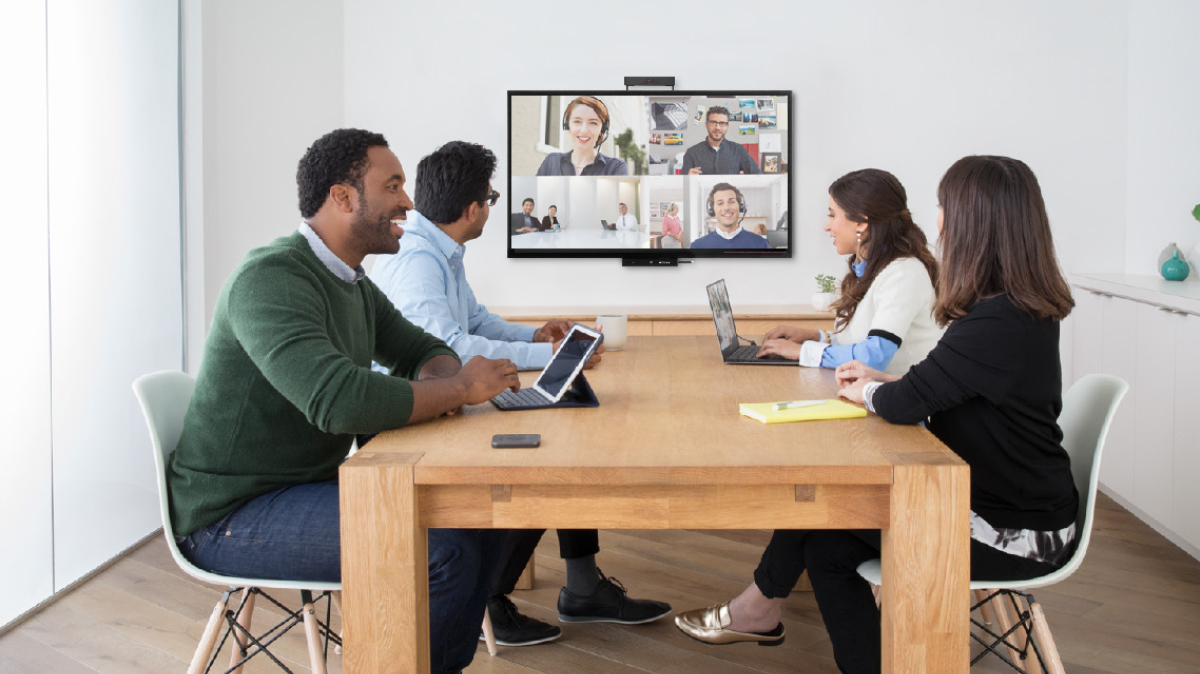


Fast forward to the here and now. A time when companies must continuously adapt to changing circumstances and realize digital transformation at a rapid pace. The internet is no longer a luxury; it is the backbone of almost every work process. Hybrid work is the norm, interactive meetings are more difficult. And meeting rooms? They are dominated by interactive solutions that maximize collaboration and engagement, while traditional flip charts and projectors have largely disappeared.
The downside of hybrid collaboration
In modern life, we literally have the whole world at our fingertips. Our phones have become all-in-one devices: photo albums, cameras, wallets, and more. Opening a laptop and joining a meeting from anywhere? Standard. Today, participants in a meeting often don't even need the same physical space to collaborate effectively.
That's fantastic – but it also brings challenges. Hybrid work and meetings require new forms of interactive consultation and engagement. Although digital meeting tools make it possible to come together remotely, the experience is not always as lively or productive as in-person gatherings. The art is to make digital meetings feel as much like real, interactive gatherings as possible.
One-way traffic
"We indeed notice that the need for interactivity during meetings is greater than ever, especially because participants are not always in the same space," says Sarah Lammers, Division Manager of i3-Technologies. This Belgian company, which develops interactive solutions for education and business, sees how traditional materials are being replaced by digital, connected technology.
"When we started 50 years ago, our company's focus was on traditional school environments – the classrooms of the past… In the early years, we only distributed and produced products that actually represent one-way traffic by definition, such as chalkboards. But around the turn of the century, we noticed a growing need for interaction and ease of use among CIOs and other executives…"
Where classic whiteboards and flip charts only showed one side of the message, modern interactive displays offer direct two-way communication, real-time collaboration, and content storage in the cloud.
Interactive displays: much more than a smart whiteboard
Instead of just writing notes on a board, interactive displays offer integrated tools that allow you to:
- save and share notes with colleagues, regardless of their location,
- organize virtual meetings with direct annotation capabilities,
- give presentations and combine tools like whiteboards, documents, and video conferencing.
Yet it turns out that even with such screens, digital meetings often still lack interaction. You might recognize it: a Teams or Zoom session where one person talks, and the rest just listens. Without the right tools and approach, it remains one-way traffic – and it doesn't yield the creative, productive session you hoped for.
Lammers emphasizes the importance of good hardware and software: "By expanding the hardware with the right software, you further promote engagement… For example, by inviting your colleagues to a brainstorming session via QR codes or by adding polls to ask for immediate feedback."
Cloud-driven collaboration and IT efficiency
With software like cloud-based display management tools, you can not only use interactive screens for meetings but also manage them centrally. Think of:
- remote updates of software on all displays,
- sending messages to multiple screens at once,
- energy management (such as automatic shutdown outside working hours).
This integrated approach ensures that IT teams spend less time on local maintenance and can focus more on strategic innovation.
Healthy work environment as standard
Smart screens can go even further than just collaboration. Modern solutions, for example, measure air quality and integrate this data into cloud systems, so you have real-time visibility of CO₂ levels, temperature, and humidity – important elements for a healthy work environment. This aligns with the broader trend that companies have paid more attention to comfort, well-being, and productivity since the pandemic.
Lammers explains this: "Our i3CAIR air quality sensor and monitor measures air quality based on CO₂, fine dust, humidity, and temperature… The IT administrator or prevention advisor can keep an eye on it in real time…"
Keep hybrid work interactive
For many companies, the introduction of working from home was an eye-opener: it does work – and often more efficiently and productively than expected. Employees expect flexibility, and companies that do not offer it risk losing talent.
"As an employer, definitely go along with this. Aim for the office of tomorrow," advises Lammers. "As a company, don't hold on to this, but give your employees the tools that make them feel at home… Tools that stimulate interaction and collaboration, even when employees are not in the same space."
Because employees may be eager to return to the office, but they are not waiting for boring, useless meetings. More than ever, there is a need for interactivity – and the right tools make hybrid work synonymous with results-oriented collaboration.