

The workplace has changed. Where the majority of the Netherlands used to gather in the office to spend the day, we now spend most of the week working from home. This comes with a number of interesting market shifts.
Laptop stands and adjustable desks were previously almost exclusively purchased by companies. Until almost everyone moved from the office to the kitchen table or home office. Ergonomics were hardly taken seriously outside the office, so neck and back pain among remote workers did not take long to appear. As a result, the supply of laptop stands and adjustable monitor feet could not keep up with the demand for a long time.
Ergonomics is a perfect example of smaller investments that contribute significantly to a pleasant transition to the new reality. If you are staring at the home PC with neck pain, you understand that your posture leaves much to be desired. Physical complaints with an obvious cause quickly prompt improvement. Therefore, we want to focus not on ergonomics, but on the less obvious areas for improvement.
Stress Solutions
NCPSB (National Center for Stress Prevention & Burnout) researched the increase in stress associated with the recent shift to remote work. The number of impending burnouts has never been so high. Various factors, including global uncertainty, play a role. And although the latter is hardly controllable, there are indeed areas for improvement that can help you further today.
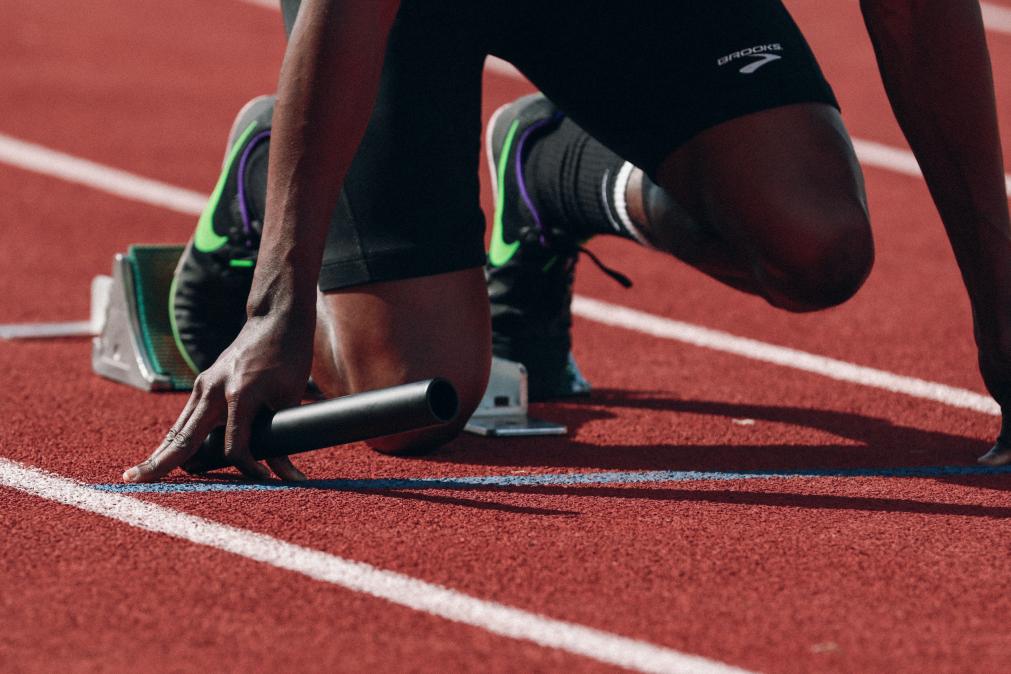
Many consider the eliminated travel time a plus. At the same time, the Netherlands walks, bikes, and moves less than before. Sports and movement have a huge impact on mental well-being. So we need to compensate for the lost movement.
Perhaps that seems like no problem at all. A daily walk - easy as pie. In reality, it is particularly challenging to realize an active lifestyle.
First of all, you need to cover quite a few kilometers to actually reach a healthy amount. Secondly, creating a consistent habit is quite a challenge. This is especially true if you have little affinity for sports and movement. To improve your chances of success, you need to make movement enjoyable. That brings us to the advice.
The smartwatch is ideally suited for the new reality. Although the devices from ten years ago could be described as gimmicky, ten years is a long time. Today, manufacturers manage to fit an impressive number of features into a watch-sized device.
The majority of models come with integrated apps for measuring performance. If you score a model that runs on Wear OS (Android) or Watch OS, such apps are not only abundant, but you also have a choice among the same mass of apps available in Apple's App Store and the Google Play Store. In some cases, mobile telephony is also possible.
All in all, you have a smart watch that can make moving more enjoyable, thereby helping to absorb the mental blow of the transition to remote work. That blow remains hard, but we will have to learn to absorb it. Every little bit helps.