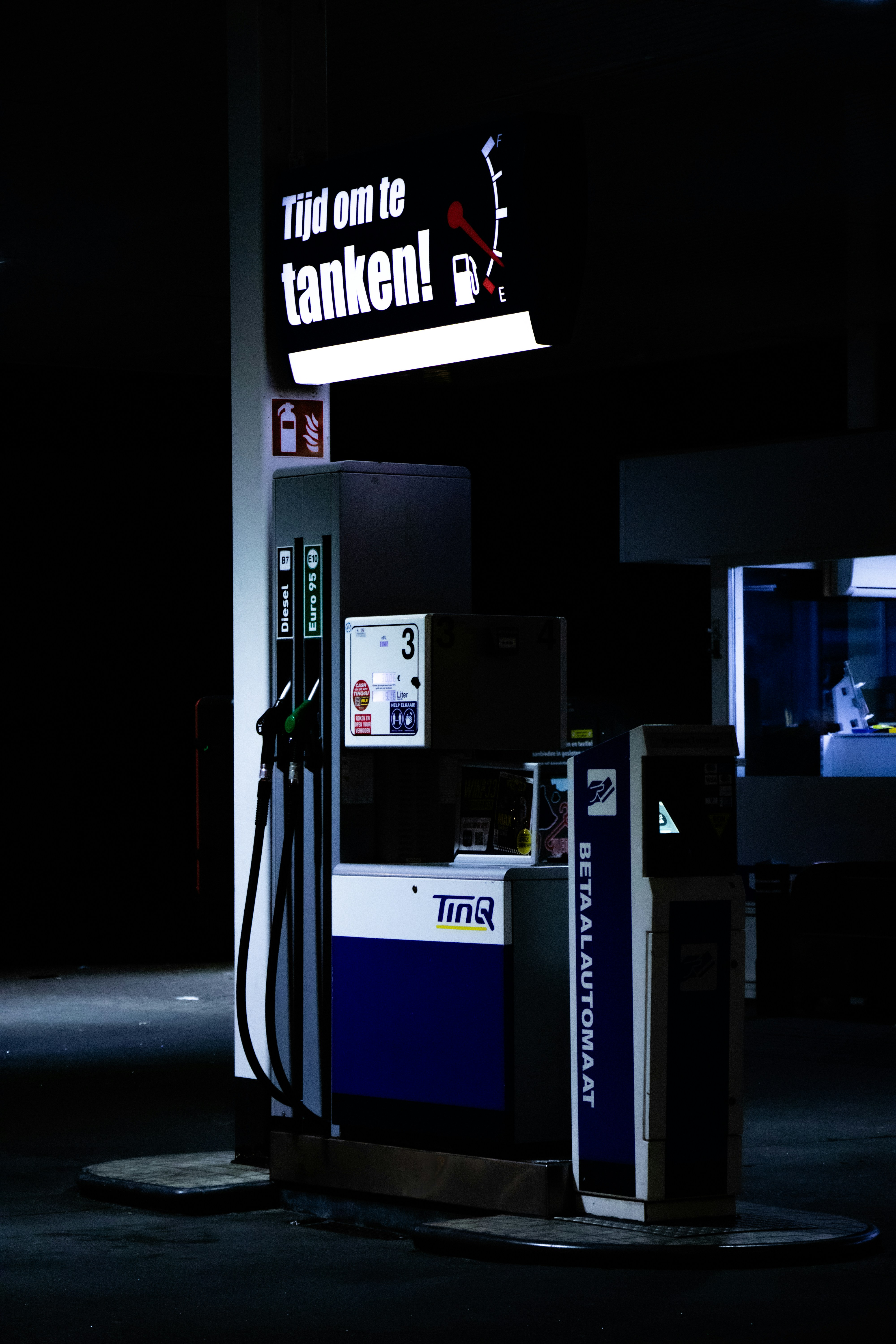

The discussion about a maximum price on gas and gasoline has returned (never) gone away. With the closure of the Strait of Hormuz, the energy market is once again under pressure: a route through which normally over a quarter of global maritime oil trade passes and about a fifth of global oil and LNG consumption is related. The IEA warns of an energy crisis and prices are skyrocketing. Suddenly, a maximum price for gas or gasoline seems logical again. But is it also wise? Or are you primarily buying political peace while pushing a bigger economic problem forward?
Why this discussion is coming back so strongly now
The Strait of Hormuz is not an obscure geopolitical footnote, but one of the most important energy hubs in the world. According to the American Energy Information Administration, in 2024 and early 2025, more than a quarter of global maritime oil trade passed through it, plus about a fifth of global LNG trade. The current disruption is therefore not a regional incident, but a direct shock for companies, transporters, energy-intensive sectors, and ultimately also consumers. The closure is clearly noticeable at the pump and on the energy bill, and the ECB warned that the war around Iran is pushing inflation up in the short term through higher energy prices.
For entrepreneurs, this is particularly relevant because energy is rarely a standalone cost item. More expensive diesel makes logistics more expensive. More expensive gas affects production, greenhouse horticulture, bakeries, chemicals, and parts of the industry. Higher energy costs also affect quotes, margins, and investment decisions.
What is a maximum price actually?
A maximum price is simply a ceiling: the government determines that a product cannot be sold above a certain level. In practice, there are various variants of this. Sometimes it concerns a hard consumer price at the pump or on the energy bill. Sometimes it is more subtle, such as a ceiling on wholesale prices, a discount per liter, a price limiter for part of the consumption, or a compensation with which the government offsets the difference. This distinction is crucial because a 'price ceiling' is not always the same economic instrument. The EU chose in 2022 not for a classic fixed consumer price for gas, but for a temporary market correction mechanism that aimed to prevent extreme peaks in the gas market.
It is precisely here that confusion begins in many discussions. Proponents sometimes act as if every maximum price works the same as above. Opponents sometimes act as if every price ceiling automatically leads to empty shelves. Both are overly simplistic. The design determines a lot. A temporary emergency brake on excessive market prices is something different than artificially keeping the pump price low for a long time.
Proponents for a maximum price on gasoline
The strongest argument for a maximum price is not ideological, but practical: in an acute crisis, a government can buy time. When energy prices explode in a short time, households and businesses are in trouble before wages, contracts, production processes, or logistics chains can adjust. A maximum price can then act as a shock absorber. It prevents one geopolitical blow from directly translating into bankruptcies, loss of purchasing power, and political panic. The European gas measure from 2022 was explicitly presented as protection against excessive price spikes that were no longer proportionate to the world market.
For entrepreneurs, this argument is concrete. A temporary ceiling on gas or gasoline can help avoid having to rewrite quotes daily, make cash flow more predictable, and absorb abrupt cost increases. In sectors with thin margins, predictability can be almost as valuable as a low price. Especially for small businesses, price volatility is often more harmful than a slightly higher but more stable level. This explains why governments worldwide have massively turned to subsidies, discounts, and price controls on fuels since 2021. The World Bank concluded in a survey of 154 economies that a majority of countries now regulate fuel prices.
There is also a political-economic argument that often remains underexposed in discussions: markets do not always react rationally in times of crisis. Fear, speculation, illiquidity, and herd behavior can amplify price spikes. A temporary maximum price can then serve as a brake on panic, not as a permanent replacement for the market. This was also precisely the logic behind European emergency measures during the energy crisis following the Russian invasion of Ukraine.
What examples from practice show
The most interesting thing about this discussion is that practice does not yield a simple agreement for one camp.
In Spain and Portugal, the so-called Iberian exception was introduced during the energy crisis: a ceiling on the gas price used for electricity generation. The European Commission approved the measure with the explicit aim of lowering the wholesale price of electricity. Empirical research later concluded that the measure actually pressured prices compared to a scenario without intervention. But the same research pointed out that gas consumption in gas plants increased. In other words: yes, it worked on the bill, but it also changed behavior in the system.
Hungary offers another instructive example. There, a fuel price ceiling was in effect from late 2021 to late 2022. A recent study found that the average gasoline price during the ceiling was about 21.5 percent lower than in the synthetic control group. But after the abolition, the price in the ten months that followed was on average 11.6 percent higher than in that counterfactual scenario. The researchers cite disruption of competition as a possible explanation. That is an uncomfortable lesson: a maximum price can help in the short term, but damage the market structure in the long term.
In Belgium, there is currently also a maximum price for fuels. What has been shown so far is that Dutch people living near the border do not mind making an extra trip for gasoline. The driving consumer benefits the most from a maximum price in this case - also the people who need it most, right?
Also outside of energy, you see the same pattern. Rent regulation for example, which leads to more affordable housing, but also often less supply and poorer maintenance, making the shortage worse in the long run. In the pharmaceutical sector, the picture is more subtle: the WHO states that pricing policies around medicines can indeed contribute to affordability and access, but only if they are carefully designed, implemented, and regularly reviewed. A price ceiling can therefore work, but rarely without side effects.
That is precisely why the question 'does a maximum price work?' is actually too coarse. The better question is: for whom does it work, for how long, and against what side effects?
Counterarguments against a maximum price on gasoline
The classic economic criticism is simple: if you artificially set the price below the market equilibrium, demand rises and supply falls. Then you get shortages, queues, rationing, or black markets. The risk is particularly high with energy because supply cannot scale up overnight. A low pump price does not suddenly make fuel abundantly available. And a low gas price does not suddenly make LNG cheaper on the world market. European legislation regarding the gas market correction mechanism acknowledged this itself: an intervention must not disrupt price signals so much that gas no longer flows to where it is most needed.
There is a second objection: who pays the difference? If suppliers are not allowed to sell at a loss, the government must compensate. Then the bill shifts from the consumer to the taxpayer. That may be temporarily defensible, but it is not free policy. France faced significant budgetary costs during previous energy interventions, and Le Monde reported this month that Paris sees no room for new generic fuel subsidies or price freezes for that reason.
A third objection is behavioral. High prices also have a function: they force savings, efficiency, and innovation. That sounds harsh, but it is economically relevant. If gas and gasoline remain artificially cheap, the incentive to drive more efficiently, electrify processes, plan inventories smartly, or invest in alternatives decreases. The success of the market correction in Spain and Portugal, for example, was accompanied by increased use of gas plants. This shows that price protection sometimes clashes with sustainability and demand reduction.
Then there is also a point that a maximum price for gasoline would counteract market functioning. Right-wing, liberal parties prefer to focus on a tax reduction for that reason. The price also drops, but at the expense of the state instead of oil companies.
That is not the only political objection: temporary maximum prices tend to want to become permanent. Once citizens and businesses get used to the protection, phasing out becomes electorally self-harming. Hungary shows how difficult the landing can be afterwards. This makes price ceilings administratively attractive at the moment, but risky if an exit strategy is lacking.
So: maximum price on gas and gasoline, good idea or not?
The honest answer we have to that is: yes, but only as an emergency instrument and no, not as a structural solution. A maximum price can be defensible in an acute energy crisis as a temporary fire extinguisher. Not because it is economically pure, but because it buys time, maintains social peace, and protects entrepreneurs from a shock they cannot influence. In a situation where the Strait of Hormuz is effectively closed and energy prices are being driven up worldwide by war and disruption of shipping, it is defensible for governments to flatten excessive peaks.
But whoever uses the instrument must also be honest about the conditions. A workable maximum price is temporary, transparent, targeted, and linked to an exit plan. It should preferably not subsidize the entire consumption but primarily protect the basics. It must be accompanied by energy savings, targeted support for vulnerable businesses and households, and a clear phase-out as the market stabilizes. Otherwise, an emergency brake turns into a structural distortion.
Those who claim that the market will solve everything by itself ignore how disruptive geopolitical shocks can be. Those who claim that the government should simply fix prices ignore how hard reality can hit back through shortages, costs, and wrong behavior. The real discussion is therefore not market versus state. The real discussion is which type of intervention in an emergency situation causes the least damage.
Perhaps this is the sentence that best summarizes the debate: a maximum price is not a solution for an energy crisis, but a way to absorb the first blow.
You can be in favor of it because you weigh economic stability and social peace more heavily than market purism. You can be against it because you think that price distortion ultimately costs more than the shock itself. But those who want to seriously discuss this topic cannot suffice with slogans. Practice shows that maximum prices are often both useful and harmful at the same time. The question is only: which damage do you prefer to accept?