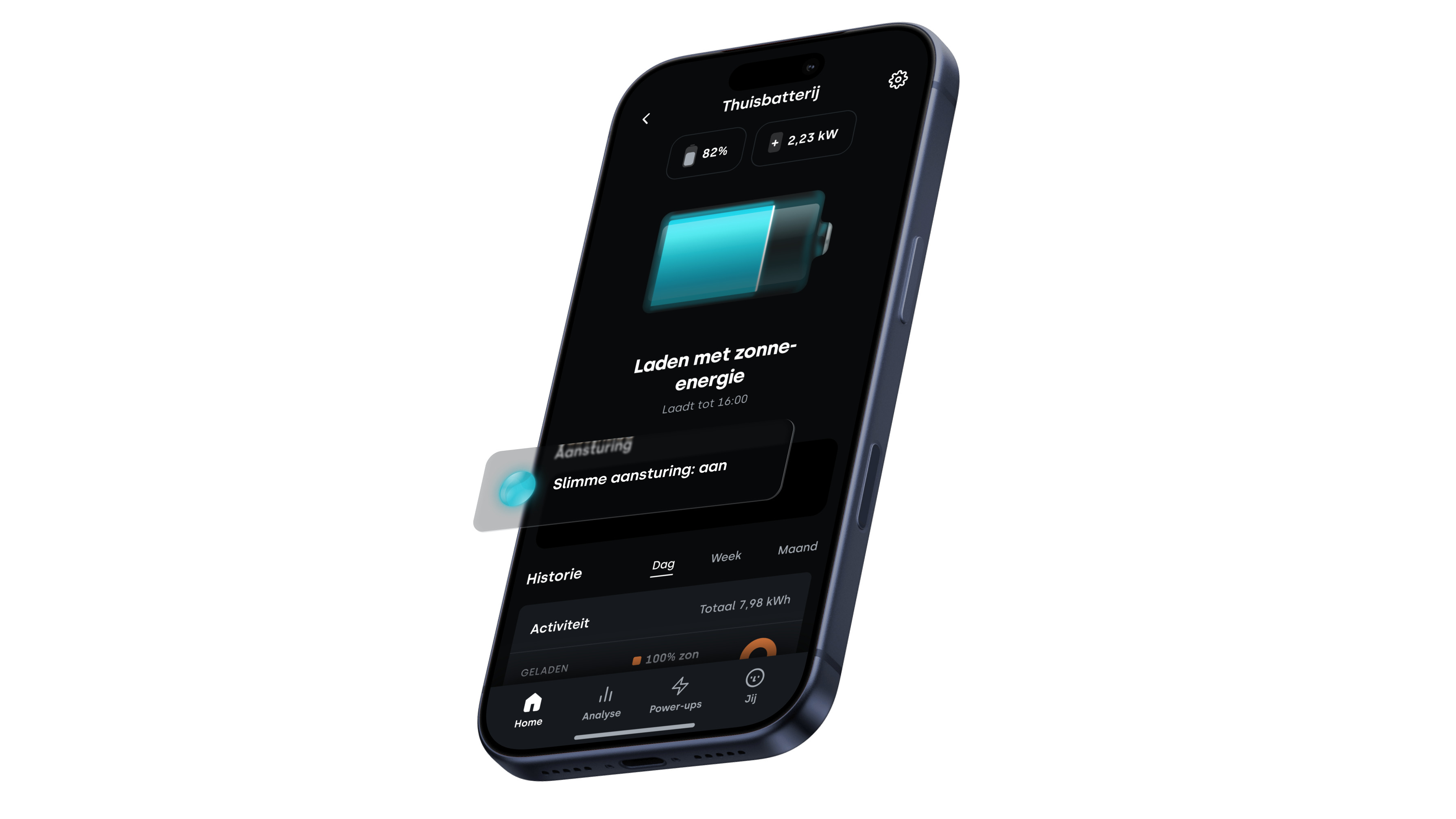

Why smart home batteries are particularly interesting
In recent years, solar panels have become almost as normal as a car in the driveway. But while generation is growing rapidly, the power grid is visibly lagging behind: grid congestion, feed-in limitations, and declining compensation for fed-in electricity are now familiar themes.
Many households are therefore taking a step further with a home battery. It captures excess solar energy during the day so that you can use it yourself in the evening. This increases your self-consumption and reduces the amount of electricity you send back to the grid for a often modest compensation. However, in the Netherlands, it is still a clear early adopter market: estimates range from roughly 15,000 to 39,000 home batteries, or just a few tenths of a percent of all households. Most roofs now have solar panels, but the step to storage is still a distant prospect for many people. How the first Dutch AI home battery responds to this development, you can read in First Dutch AI home battery now available.
Take a sunny spring day: during the day, your panels produce more than you consume. Without a battery, that surplus goes to the grid, and you simply buy electricity again in the evening while cooking, showering, or charging your electric car at the then applicable rate. With a "dumb" battery, you shift some of that solar energy to the evening. With a smart battery, you can also respond to price differences: extra charging during a cheap night with lots of wind energy and discharging during the more expensive hours in the morning or evening peak.
Yet a traditional battery remains relatively "dumb" in many cases:
- it primarily charges when the sun is shining,
- it discharges when there is demand at home,
- and hardly takes into account electricity prices or grid load.
In studies on home batteries, roughly three ways are mentioned in which such a battery can provide value: by increasing your self-consumption of solar energy, by taking advantage of price differences over time (energy arbitrage), and by providing flexibility to the grid – for example, via the imbalance market or other flexibility markets. The phasing out of the netting scheme makes that first one – consuming as much as possible yourself – more important in the coming years than "feeding everything back to the grid".
Exactly there, the market is now changing rapidly. Dynamic energy contracts – where you pay hourly prices from the wholesale market – are gaining ground. At certain hours, electricity is extremely cheap, while at other times the price peaks. Combine that with a home battery, and you see the potential: not only buffering solar energy but actively controlling based on time and price.
Tibber has long positioned itself as an energy supplier that focuses primarily on smart energy use: via app, consumption data, and connections with devices. Smart Battery fits seamlessly into that strategy. The promise: to control your existing battery more intelligently, allowing you to get more out of the same hardware. While many parties are still focused on selling new batteries, Tibber explicitly chooses to make existing installations smarter – especially for that relatively small but rapidly growing group of early users.
Tibber Smart Battery and Bridge: what is it exactly?
Important to clarify immediately: Smart Battery is not a physical battery. It is a software feature in the Tibber app that adjusts the battery and inverter based on real-time data and dynamic prices.
To let the home battery communicate with Tibber's energy management system, there is the Tibber Bridge:
- a compact box that you plug into the socket;
- connects to your inverter or home battery via your home network;
- links that hardware to Tibber's platform and the app.
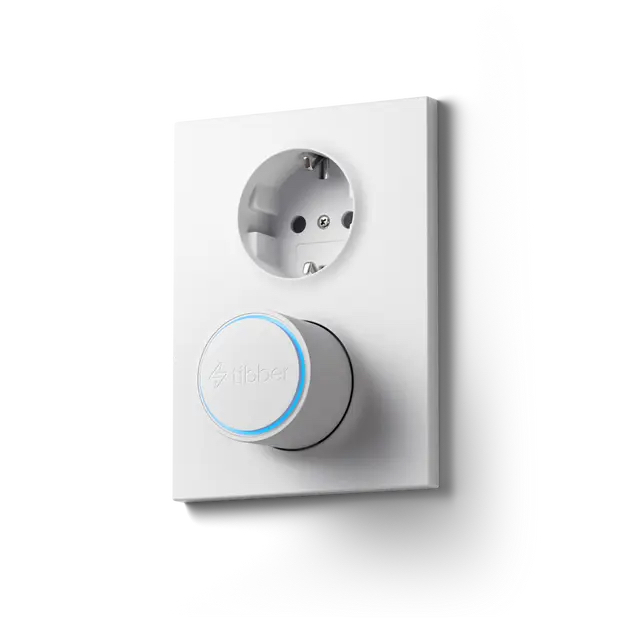
Tibber Bridge
With that combination, Tibber can not only control its own Homevolt battery but also inverters and batteries from SolaX and Kostal, among others. New connections have also been announced, further increasing the number of compatible systems.
Tibber states that Smart Battery with this approach – and as more connections are added – can potentially "unlock millions of existing batteries and inverters" worldwide. The Tibber Bridge is a relatively small additional investment (roughly €100-€140, depending on customer discount) – especially compared to the total costs of panels and a battery. We will discuss the current price later.
In practice, Smart Battery does three things:
1. Collecting data
The Bridge continuously reads relevant data: charging status of the battery, solar yield, consumption in the house.
2. Linking price information
Tibber uses dynamic electricity prices and market information. The system "sees" when electricity is cheap or expensive.
3. Automatically controlling
Based on that information, Smart Battery determines when the battery is charged or discharged, within the limits you set as a user.
You don’t have to log in every hour to shift sliders. The idea: you let software do the work and utilize your home battery much smarter, without needing to buy new hardware. For existing battery owners, it feels more like a smart upgrade than a completely new project.
This is how a smart battery makes money (or saves more)
Tibber roughly distinguishes three ways in which Smart Battery can help save or even earn:
1. Smart charging and discharging based on price
The most direct is dynamic price optimization:
Is the electricity price low (for example, in the middle of the night or with a lot of wind production)?
Then the battery charges as much as possible.
Are prices skyrocketing?
Then you use electricity from the battery instead of that expensive grid electricity.
This works not only with solar energy. Even on a gray winter day, you can 'purchase' cheap grid electricity when the price is low, to use it later when rates rise.
For the energy bill, it feels simple:
you shift part of your consumption from expensive hours to cheap hours.
Anyone who wants to know more about how popular dynamic hourly rates have become can read in Half of the Netherlands considers dynamic energy contracts how consumers and entrepreneurs view this contract form.
2. Arbitrage: cheap charging, expensive selling back
A step further is buying electricity to sell it back to the grid at a higher price later, if your contract and connection allow that. It resembles trading:
- your battery charges at low prices,
- you sell that stored energy back to the grid during peak hours.
In practice, this is particularly interesting if:
- your battery has sufficient capacity and power;
- the price differences are large enough;
- your energy supplier supports a model that allows you to actually benefit financially from it.
Tibber positions Smart Battery explicitly as a way to automatically take advantage of such price differences, instead of manually "trading" with your battery.
3. Grid Rewards: getting paid to help the grid
For early 2026, Tibber announces Grid Rewards: a model where you can receive compensation for supporting the power grid. Think of:
- temporarily consuming less during peak moments,
- or discharging at times when the grid is under stress.
This makes your home battery part of a larger, flexible "virtual power plant". For individual households, this mainly revolves around modest extra income and the idea that you are actively helping to stabilize the grid. In fact, Tibber bundles the flexibility of thousands of small batteries and devices into one large virtual power plant that can respond to the grid's demand. Independent analyses of home batteries show that this kind of flexibility services are an important building block to make the business case work – alongside self-consumption and price arbitrage.
A simple calculation example
To illustrate the scale: suppose your battery can effectively shift 5 kWh per day between cheap and expensive hours. If the price difference averages €0.20 per kWh, that yields about €1 per day (5 × €0.20). If you do that for 200 days a year, you end up with around €200 per year in extra benefits.
In years with significant price fluctuations and a larger battery, that amount could be higher; in quieter years or with less flexibility, it could be lower. This makes it clear where that saving comes from, without immediately assuming the maximum amount of "up to €996 per year" that Tibber communicates.
How realistic is that 996 euros per year?
Tibber mentions a potential saving of up to 996 euros per year for households with Smart Battery. That sounds impressive, but it is important to look at what exactly is behind that.
According to Tibber, that amount applies to:
- the top 10 percent of Tibber customers in the Netherlands,
- who have saved the most with Smart Battery,
- in the period from January to November 2025.
It is explicitly about the best-performing users, not the average. Whether you fall into that category depends on:
- the size and type of home battery;
- the capacity and location of your solar panels;
- your consumption profile (high consumption at flexible moments? heat pump? EV?);
- how large the price differences in the market are in a year;
- how actively you optimize settings yourself.
Therefore, it is more realistic to see that 996 euros as an "up to" amount in favorable circumstances, rather than as a typical outcome for every household.
Independent studies from RVO and CE Delft also show that income from energy arbitrage alone is usually not enough to make a home battery profitable; rather, the combination of more self-consumption, smart handling of dynamic prices, and participating in flexibility services (such as imbalance or capacity markets) brings the business case towards such amounts.
For the Baaz reader, this boils down to:
Do you have a serious battery, a lot of solar energy, a dynamic contract, and flexible consumption?
Then Smart Battery can make a significant difference.
Is your setup smaller or less flexible?
Then your savings are likely to be much lower, but smart control can still be useful.
It is therefore important to translate that marketing claim to your own situation, rather than simply adopting the amount one-to-one.
Who is this interesting for – and who is less so?
Smart Battery is not a magic button for every household. The added value varies significantly by profile. Since home batteries are currently only present in a small part of households in the Netherlands, we are mainly talking about tech-savvy early adopters who are actively engaged with their energy consumption and rates. Especially in regions with grid congestion, and as netting is phased out, the step to storage and smart control becomes more attractive for that group.
Profile where Smart Battery yields the most
The chance of serious savings is greatest if you:
- have solar panels and an existing home battery (or are about to install one);
- have a dynamic energy contract, or are willing to switch to one;
- have reasonably variable consumption, for example due to:
• an electric car that you can charge smartly,
• a heat pump,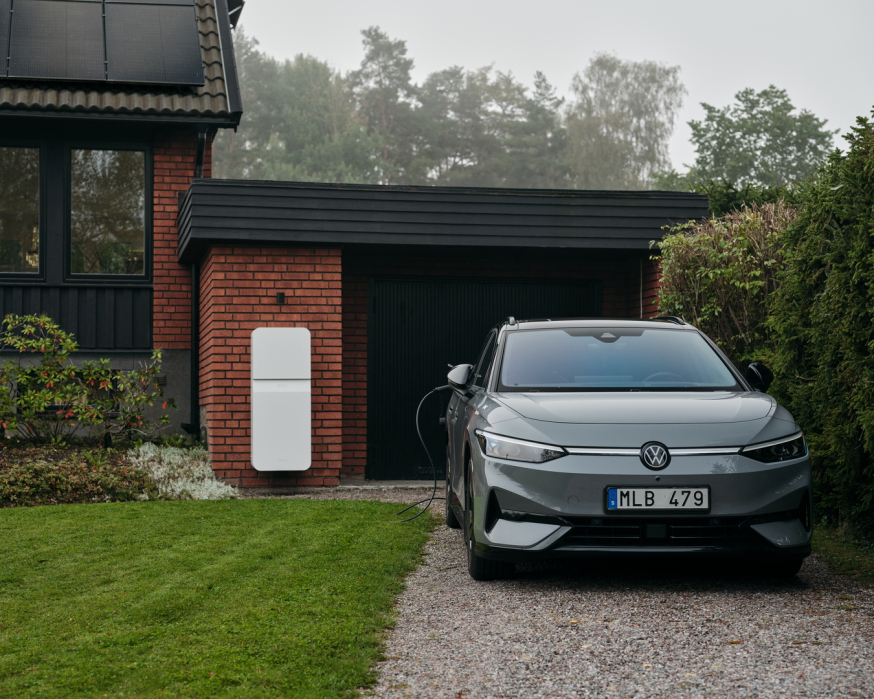
Image: Tibber Smart battery as home battery to charge your electric car
• a lot of working from home or equipment that you can schedule.
For the typical Baaz reader, there are extra hooks:
- entrepreneurs with a home office;
- small practices, studios, or shops with their own roof and solar panels;
- self-employed and SMEs who privately invest but look at returns and risks with a business eye.
When is it less interesting?
The added value decreases if:
- you do not have a home battery (then this is mainly future music);
- your solar energy is limited (small roof, a lot of shade);
- you have a fixed energy contract without large price variation;
- your consumption is fairly even and low.
In those cases, smart control is still handy, but the difference on the annual bill will be more modest. Then you might wonder if the extra complexity is worth it.
Practical considerations: technology, costs, and risks
Before you enthusiastically order a Bridge, it is good to go through a few practical points.
1. Technical compatibility
Check if your inverter and battery are supported
(as mentioned: including SolaX, Kostal, and of course Tibber's own Homevolt).
Ensure a stable wifi connection: the Bridge needs to continuously exchange data.
Look at the settings of your battery:
- minimum and maximum charging levels,
- reserves you want to keep (for example, always keeping 20% reserved).
2. Costs and payback period
The Tibber Bridge is available in the Tibber Store for €139.95 without energy contract and for €109.95 with Tibber customer discount (Netherlands, price level at the end of December 2025). Additionally, expect any installation or configuration costs if you do not want to do it yourself.
There you set against possible savings. The ROI depends on:
- the savings per year (which again depends on all the factors above);
- how long your battery lasts;
- how stable your consumption and contract form are.
It pays to make a simple calculation example: what do I save in a conservative scenario, and what does that mean relative to the purchase costs?
3. Dependence on market and regulations
Smart Battery relies on two things that can change:
- the volatility of energy prices (if prices fluctuate less, the game becomes smaller);
- regulations and grid fees (for example, adjustments regarding feed-in or grid management).
Additionally, you depend on:
- Tibber as an energy supplier and platform;
- the proper functioning of the Bridge and the software.
If the connection fails, your battery still works, but more like a "classic" system: useful for self-consumption, less sharply controlled on prices.
Conclusion: smart home battery as the next step in energy management
With Smart Battery and Tibber Bridge, Tibber takes a logical next step: not yet another new hardware solution, but a software layer that makes existing home batteries smarter. For households (and entrepreneurs) with solar panels, home storage, and a dynamic contract, this can yield significantly more returns from the same installation.
The maximum saving of 996 euros per year is primarily a best-case scenario for the frontrunners in usage – not the standard that every user can expect. But even if you don’t come close to that, the combination of:
- automatically charging at low prices,
- discharging at expensive hours,
- and possibly participating in grid services
ensures that your home battery becomes more than just a storage vessel for solar energy.
For the average Baaz reader:
Do you have no battery, little solar energy, or a fixed contract?
Then Smart Battery is mainly something to keep an eye on for the future.
Do you have a battery, solar panels, and dynamic rates, and are you closely monitoring your energy bill?
Then smart control like that of Tibber can be an interesting next optimization step.
What this development shows is that the energy transition is no longer just about "how many panels are on your roof," but increasingly about how smartly you handle that energy. Software, data, and dynamic prices are becoming just as important as the hardware itself. Tibber is certainly not the only player in this young market, but it is a party that clearly shows how you can get more out of existing energy hardware with software and dynamic rates – without the need for a completely new system to be introduced first.
In Green technology in IT: sustainable and advantageous, you can read how smart, energy-efficient technology can contribute to lower costs and a more sustainable strategy across your business.