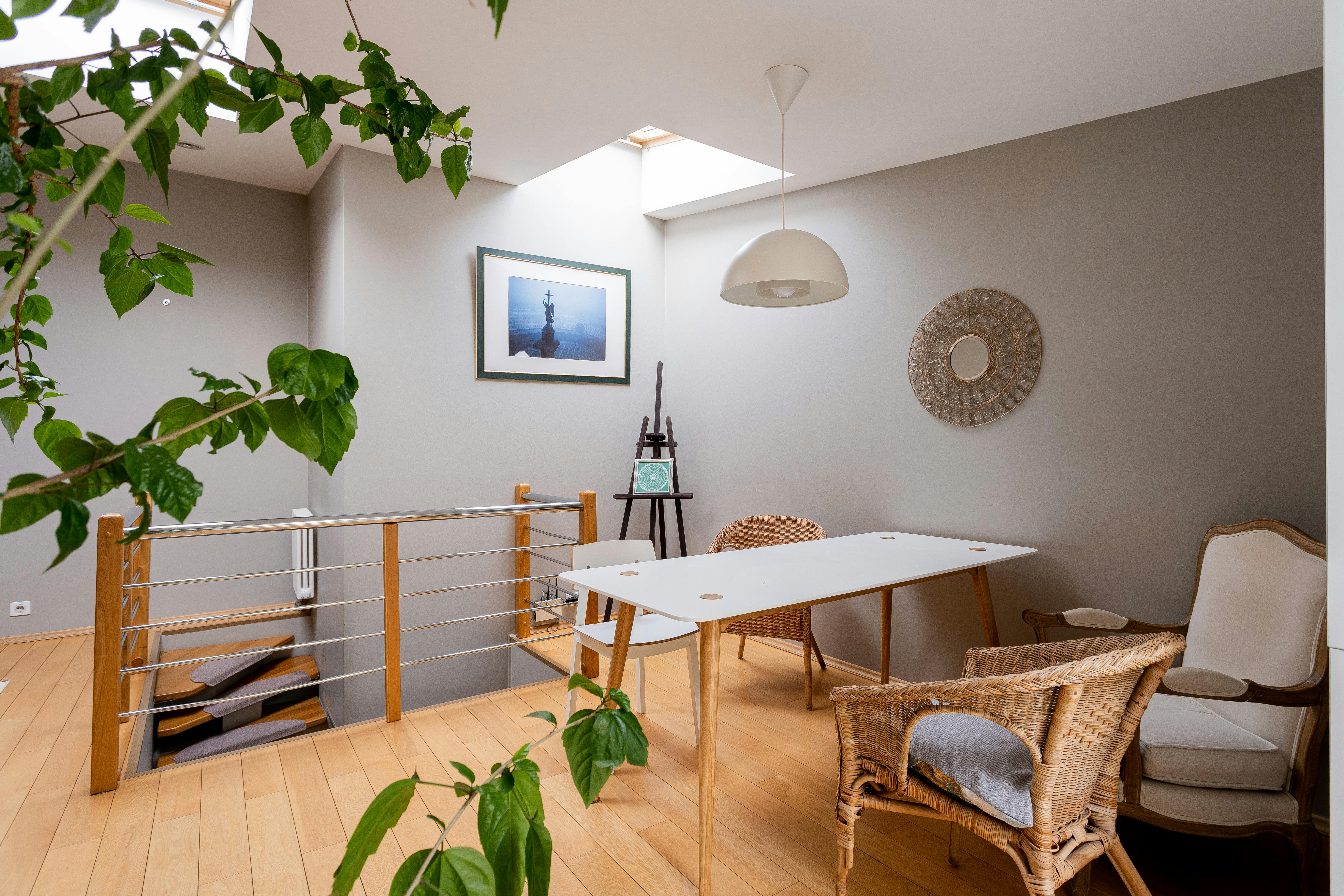

Start with the use: what do you want to do above without hassle?
If you start with the use, your mezzanine not only makes sense on paper, but it also works well in practice.
In storage, it's not just about how many kilos, but how the load actually reaches the floor. A full pallet in one spot is different from many boxes spread out. Therefore, include the heaviest points and your driving movements (pallet truck, cart, etc.) so that the floor does not feel unnecessarily lively.
In a work platform (packing, assembly), it’s about workspace and walking comfort. A good design logically places walkways alongside workbenches, makes passing easy, and allows edges and railings to connect to your workspace. Include workstations and walk zones early on, so that the busiest areas remain spacious enough.
In office space at the top, practical points often involve noise from below, dust, and the management of cables and technology. You recognize a neat solution by quiet walls and ceilings, logical conduits, and a space that is easy to keep clean. If you take this into account right away, you prevent the need for power, data, and partitions to be added later.
What often works: briefly list what happens per zone, how many people are there at the same time, and what resources you use (for example, carts or pallet trucks). Then you quickly see where there is little flexibility.
When custom solutions make sense (and when it's better to keep it simple)
Custom solutions become interesting as soon as your space or process does not fit neatly into a standard layout. Think of columns that are exactly in an aisle, routes that must remain free, or a connection to shelves or machines (for example, with a conduit or access gate). Then custom solutions help because the design adapts to how you work, rather than the other way around.
Two checks that give you a lot of clarity in advance:
First: with custom solutions, preparation is important. A good partner arranges choices in a logical order: first the main lines (routes, zones, no-go areas), then the details. This keeps it clear and makes decisions about stair positions and walking routes faster.
Second: the more specific the design, the more fixed your layout will be. Handy if your process is stable. If you expect that shelves, workstations, or walking routes will change soon, then a simpler platform or a modular expandable solution is often smarter. This way, you can adjust more easily later without everything needing to be redrawn.
At Nolte, they consciously choose an approach where the use is leading. Our experts recommend fine-tuning details only when your routes, workstations, and shelves are reasonably stable for the coming years. This usually keeps the process calmer and helps you make choices that you can rely on for a longer time.
The information you prepare in advance for a smooth conversation
You don’t need to create a thick package; with a few points at hand, the conversation becomes more concrete faster:
- Free height and drive height: include lighting, pipes, and doors
- Walking routes and access: where can a staircase fit without crossing pick routes?
- Columns and no-go zones: where must nothing be in the way?
- Connections: immediately sketch connections with shelves, machines, or a conduit
This is how you recognize if a partner really thinks along as a specialist
Focus less on pretty pictures and more on substantiation. You are usually in good hands if a partner:
- Asks about your use per zone (what happens where, with how many people and what resources)
- Sharpens no-go zones and fixed routes (where must nothing come and why)
- Clearly states what input is needed for a proposal
- Shows variants that fit your use (for example, different floor construction or access)
- Indicates how missing information will be captured (for example, first measuring, or finalizing choices later)
A specialist often asks direct questions (such as where your process can still change). That is usually a good sign: it brings things to the table early and aligns the design immediately, so that adjustments later are limited.
Do you want to focus on your orientation with Nolte? Ensure that the conversation quickly gives you a concrete picture of your zones and no-go areas, so that you immediately know where custom solutions really solve something.