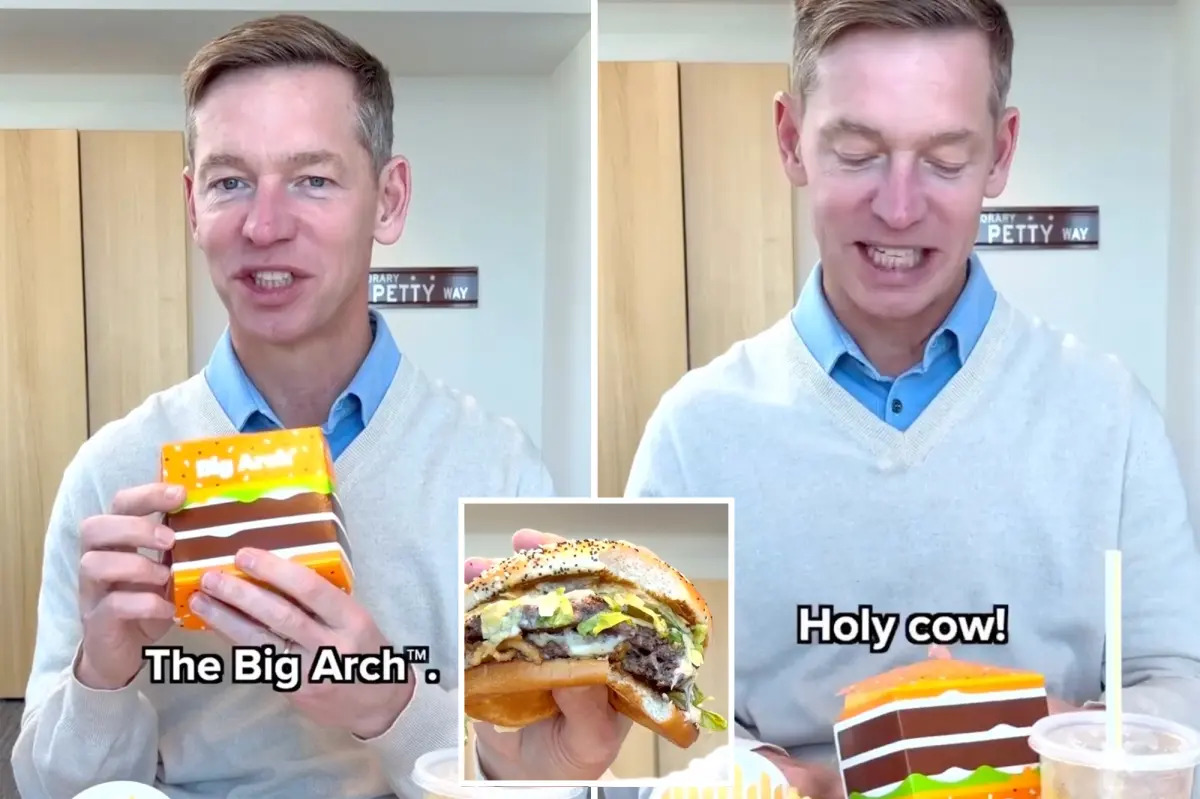

This week, a video went viral in which McDonald's CEO Chris Kempczinski wanted to promote the new Big Arch burger. In the clip, he tries to praise the sandwich, but his posture and way of eating came across as unnatural: he consistently refers to the burger as a 'product', takes only a small bite, and seems uncomfortable handling the enormous burger. The video was widely mocked and criticized: viewers thought he didn't like the burger and even called him too distant to represent a food brand.
That may sound innocent, but it touches on a core principle in brand and product marketing: if the leader of your company does not come across as credible with your product, it directly harms brand perception among consumers.
 
Where the credibility of the McDonald's CEO fell short
It's not surprising that Chris comes across as so unbelievable. Three points go wrong in the video that cause
1. Customers want authenticity
Marketing is not just about words, but about what those words mean to customers. In this case, the video created the opposite of connection: a CEO who expresses himself too corporately and at the same time does not seem to enjoy his own product works counterproductively rather than convincingly. That undermines trust in what the brand wants to say about its menu items.
2. Credibility is more tangible than ever
Social media have set the bar high for honesty. Consumers expect leaders not only to talk about their products but to actually use and appreciate them. So when someone holds the burger - in this case - as if he has never done it before, it stands out immediately.
3. Your CEO is not an actor; he represents your brand
Research shows that the presence and credibility of a CEO have a direct impact on brand perception. Well-known CEOs can have a positive effect on the brand, but their love for the company or products must come across as genuine. Most CEOs still work behind the scenes; and sometimes that might be for the best.
Examples of leaders who do use credibility carefully
The solution seems simple: as a CEO, step into the spotlight only if you are good at conveying enthusiasm for your brand or products, or when you truly believe in the message behind the company. Do you want to come across that way? Then you might want to look more at the following leaders.
1. Pieter Zwart - Coolblue
Pieter Zwart is now one of the most well-known entrepreneurs in the Netherlands. Not surprising, because with his videos he precisely conveys what Coolblue stands for: 'Everything for a smile.' He appears in commercials, presents strategies in the same lightly ironic tone as the brand, and consistently emphasizes customer satisfaction as a core value. In interviews, he repeatedly emphasizes that Coolblue "does everything to make customers happy" and that culture comes before spreadsheets.
If you have seen him, you also know that this cheerful man truly believes in his company. His credibility lies in this case in the consistency; he always does everything to put that smile on your face.
2. Yvon Chouinard - Patagonia
Patagonia positions itself as sustainable and anti-consumerist. Founder Yvon Chouinard went beyond marketing. In 2022, he transferred ownership of the company to a trust and non-profit structure, so that future profits benefit climate goals.
It was a final act, but one that made a point about Patagonia's message. No one could doubt Chouinard's intentions anymore, and the brand promise was more than ever backed by action.
3. Ben Cohen & Jerry Greenfield - Ben & Jerry's
Since its founding, Ben & Jerry's has not only focused on flavor but also on being socially engaged. For almost 50 years, the company has committed to its social mission: fair trade, environmental awareness, and a better world for everyone. Even when it gets tough, for example due to pressure from the parent company Unilever, the two hold on. Again, consistency plays a big role in credibility.
Credibility makes or breaks product communication
There are therefore several points where you can demonstrate your equality. The most important are these:
 
- Ensure that leaders truly stand behind the product. A tweet, video, or interview only works when the CEO genuinely shows that he/she understands, appreciates, and uses the product. People can smell when it's fake.
- Speak the language of your customer, not of the boardroom. The word 'product' may sound businesslike, but it sounds strange when you are eating lunch. Brand communication must connect with the reality and expectations of consumers.
- Meaning over corporate jargon. Authenticity means that your CEO does not just talk about strategy but tries to translate what that means in terms of product experience, emotion, and use.
- Consistency between leadership and brand promise. The more successfully linked cases show that your CEO must be the voice of what your brand promises. Without that, there is a good chance your audience will not believe what you say.
The viral spot of McDonald's CEO Chris Kempczinski illustrates an important marketing principle: when credibility is lacking, especially from a CEO, every promotional message backfires. The human connection between leadership, product experience, and communication is not a soft add-on, but it determines how your brand is received.
Well, it could also be that McDonald's is going for negative attention, as we have discussed before. Everything can be fake these days; maybe Chris is a fantastic actor. But it is not crazy to say that your credibility in marketing is the greatest asset. And believe me - you want to hold onto that.