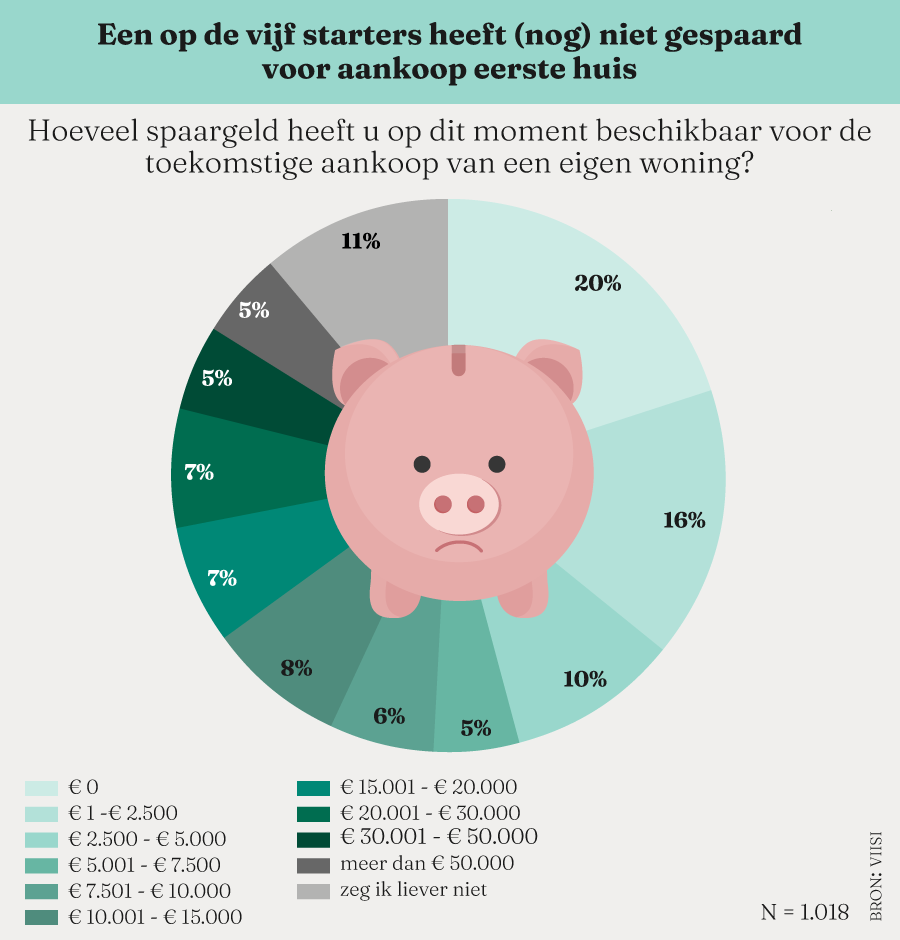


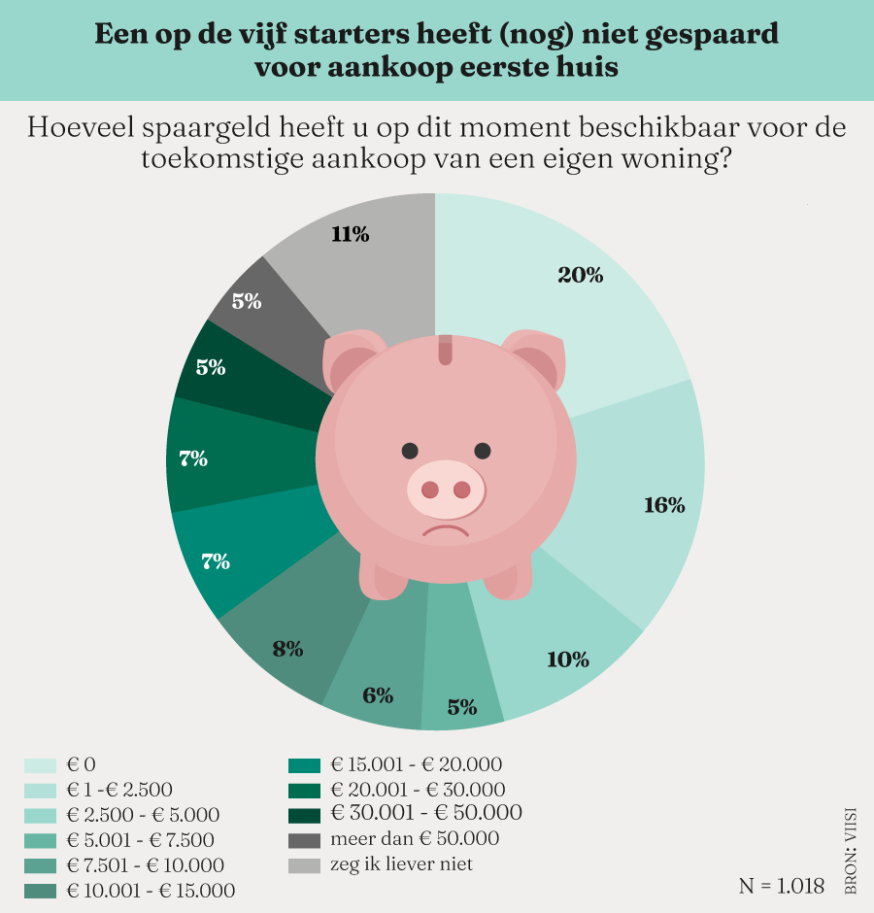
Nearly half have less than five thousand euros in personal funds
This means that a Dutch starter must have saved at least ten thousand euros for an average home (€488,000, HDN, December 2024). The research shows that only a third of all respondents currently meet this requirement. "This applies not only to vocationally trained individuals, but also those with secondary and higher education have relatively little saved for the purchase of a first home," says Hergen Dutrieux, co-founder of Viisi Hypotheken. "The vast majority of them know they need more savings, but for various reasons, they are unable to set aside money."
A helping hand
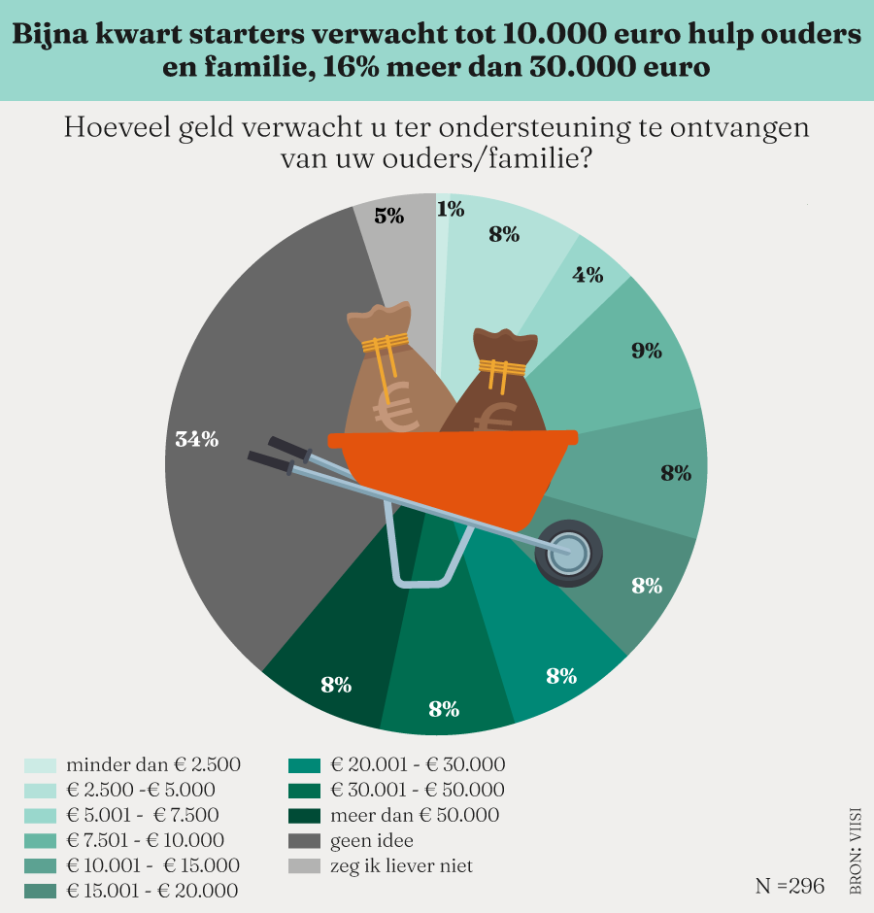
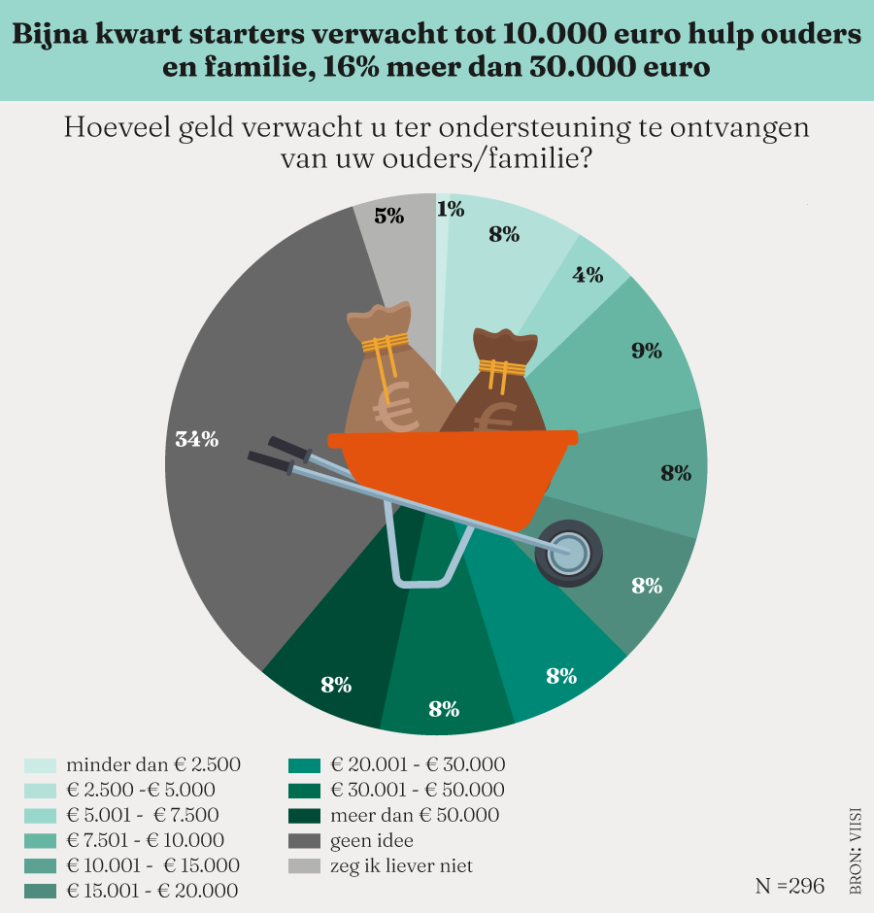
Due to the modest size of their savings, no less than three-quarters of all Dutch starters believe they will need to save for at least another three years before they can buy their own house. However, 57 percent of them say they currently cannot set aside any money for this. Interestingly, this is more often the case for female starters (62 percent) than for their male counterparts (52 percent). A third of all starters may therefore assume that their family members will financially contribute to their first home purchase. Of all respondents, 22 percent expect to receive a maximum of ten thousand euros from family members. No less than sixteen percent expect that they will receive at least thirty thousand euros. Dutrieux: "In the current hyper-competitive housing market, every little bit helps. Parents can gift their children up to €32,195 tax-free in 2025 for example, for the purchase of their own home. Another way to give children or family members a financial helping hand is through a family mortgage. In this case, you borrow part of the mortgage amount from a family member, often under more favorable conditions than with a bank. We notice that since the abolition of the jubelton, more and more young people and their parents are seeking information about this."
Expectation index dropped
The research shows that starters have become significantly more pessimistic about their future chances in the housing market. Only sixteen percent of them expect to be able to buy their own home in the coming twelve months. A quarter ago, this was still 24 percent of all respondents. Interestingly, the expectation index dropped the most among those in their thirties: from 27 percent in the last quarter to just fifteen percent now. Dutrieux: "The average house price has risen sharply in recent years and will continue to rise given the high demand and limited supply. However, this does not mean that the average Dutch starter is completely out of luck. According to the Kadaster, more than twenty-four thousand homes were sold to starters in the third quarter of 2024, nearly three thousand more than in the three months prior."
About Viisi Hypotheken
Viisi Hypotheken specializes in independent mortgage advice and primarily assists starters and (young) professionals in purchasing their first or next home. All advisors are academically trained. Viisi Hypotheken is a company with a clear mission: let's change finance. The company has a so-called #peoplefirst strategy, which means that its own employees come first, followed by customers, and then shareholders.