

Businesses are facing a shift in customer behavior. Traditional communication channels for marketing, sales, and customer service via phone and email are no longer preferred. Conversational support, marketing, and direct sales through a broader range of consumer preferred channels is the key to being future-proof. Veerle Knechten, Partnership & Alliances Manager at MessageBird and Thijs Wolbers, Head of Digital Commerce at Adwise provide an insight into the new consumer, the developments, and the effects.
Research shows that 72% of consumers prefer not to contact customer service via phone anymore. They want to take matters into their own hands and find answers to their questions themselves (81%) and now prefer chatting. This applies to 61% of consumers, with 75% even believing that this leads to a closer relationship with the company. This means that businesses are looking for new applications to reach consumers and strengthen the relationship.
"The rise of Generation Z makes conversational marketing even more important for companies to remain future-proof. They have grown up in a digitalized society and have their smartphones in hand almost 24/7. If you want to reach them and bind them to your brand? Then you will need to make a shift from your own channels to those they prefer", says Wolbers.
Responding to customer wishes
Where eight out of the ten most downloaded apps are social messaging apps or contain a messaging function, such as Facebook Messenger, Instagram, Snapchat, and TikTok, it is clear where the consumer is located. This makes an omnichannel communication strategy and the use of conversational marketing essential for companies. It also requires an integration of the now often separate silos of marketing, sales, and customer service for personalized communication. In this way, consumer activities across different channels can be recognized, which offers new opportunities for personalization and segmentation of the customer base. This could include linking purchase history and previous contact with the customer service team.
Furthermore, the integration of silos and communication channels creates more low-key touchpoints with the consumer. Instead of just a confirmation email of an appointment made, the consumer can continuously be kept informed via reminders and, for example, delivery updates in e-commerce. This alone reduces the percentage of no-shows or closed doors. The same applies to follow-ups when a consumer has not ordered anything for a long time, sharing promotions, and personal discounts. An additional advantage of creating extra touchpoints through a communication medium, such as WhatsApp, is that the open rate is as much as 78% higher than the 20% for email campaigns.
A step further is conversational commerce, where social media channels transform into a true sales channel, including insights into assortments and the ability to complete payment directly in-app. This maintains the same benefits as conversational marketing and adds an extra dimension of convenience for both the consumer and the business. This way, the number of touchpoints to boost sales can be increased – whether or not for the 7 out of 10 times when the (virtual) shopping cart is left behind without purchase.
"If you want to remain relevant to the consumer – also in the future – then this is the time to delve into conversational commerce. Within five years, this will be the norm for the entire Dutch business community. I am convinced of that", says Knechten.
Up to 30% lower costs
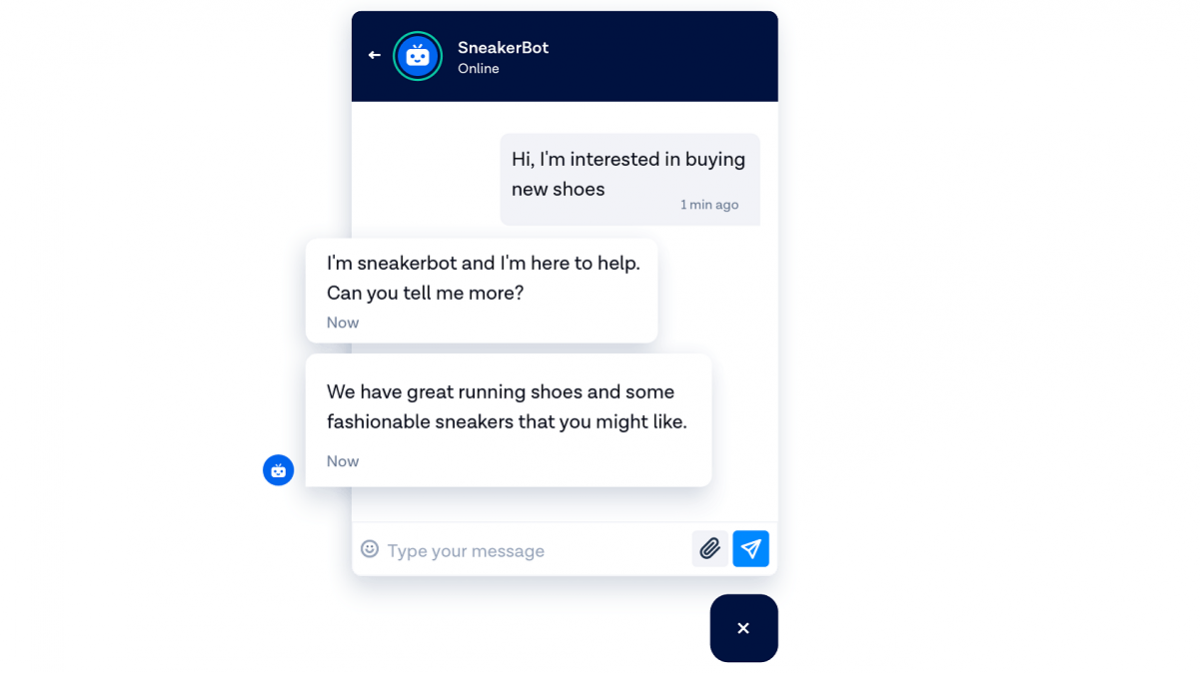
To meet the consumer's desire to find answers to any questions themselves, the use of advanced chatbots with automated flows on every communication channel is a crucial part of the omnichannel strategy. 10% of the support tickets handled via phone calls currently account for 90% of customer service costs. Chatbots with automated flows have the potential to reduce call traffic to customer service by 19%. Additionally, agents can resolve 2.7 tickets in the time of one call. All in all, this leads to a cost reduction of 30%.
The use of social media channels for customer contact also allows for asynchronous communication. Consumers can reach out and respond whenever they want, and the conversation remains always visible. They are no longer dependent on queues or accidentally closed browsers, allowing the conversation to be restarted from the beginning. This not only brings a better experience for the consumer but also has its advantages for customer service agents who, due to the asynchronous nature, are enabled to handle multiple questions simultaneously. In short: conversational marketing and commerce offer opportunities to improve the relationship with the consumer, further personalize it, and increase usability, as well as save time and costs for businesses.
Europe versus Asia
While the vast majority of the Dutch business community now incorporates various social media channels into their strategy and chatting via WhatsApp has been possible for some time, Europe is lagging behind in the development of conversational marketing into conversational commerce. In Asia, it is already being used massively via WeChat, with America and Brazil close behind. Where conversational commerce in the Netherlands currently only concerns early adopters and social media apps are still busy developing the right functionalities, this will change in the short term with an eye on convenience and bonding with the new consumer. "The question is not whether conversational commerce will become big in the Netherlands, but when," says Knechten.
About MessageBird
The mission of MessageBird is to create a world where communicating with a business is as easy as communicating with friends and family. To achieve this, MessageBird provides companies with an omnichannel platform to communicate with their customers via any preferred channel, from any corner of the world. This means that communication streams from, among others, WhatsApp, email, SMS, voice, WeChat, Messenger, Instagram, and email end up on one integrated secure platform. For customers, this means extra convenience and speed, and for customer service and marketing teams, this means more efficiency – also through the use of potential chatbots. MessageBird, headquartered in Amsterdam, processes more than 6.5 trillion messages, calls, and emails for over 25,000 customers such as Google, Airbnb, and Facebook. Since 2011, the company has grown into a powerful team of 800+ employees representing more than 55 nationalities in the 'Work from Anywhere' company.
About Adwise
Since its founding in 2005, Adwise has grown into a leading full-service digital agency with over 120 specialists. With smart innovations and creative solutions, Adwise gives companies a decisive advantage in their market. Thus, Adwise forms the digital brain of its clients. With hundreds of clients from home and abroad, more than 100 (international) awards and nominations, and as a certified partner of Google, Microsoft, and Facebook, Adwise is the specialist in digital business acceleration.
Sources: